
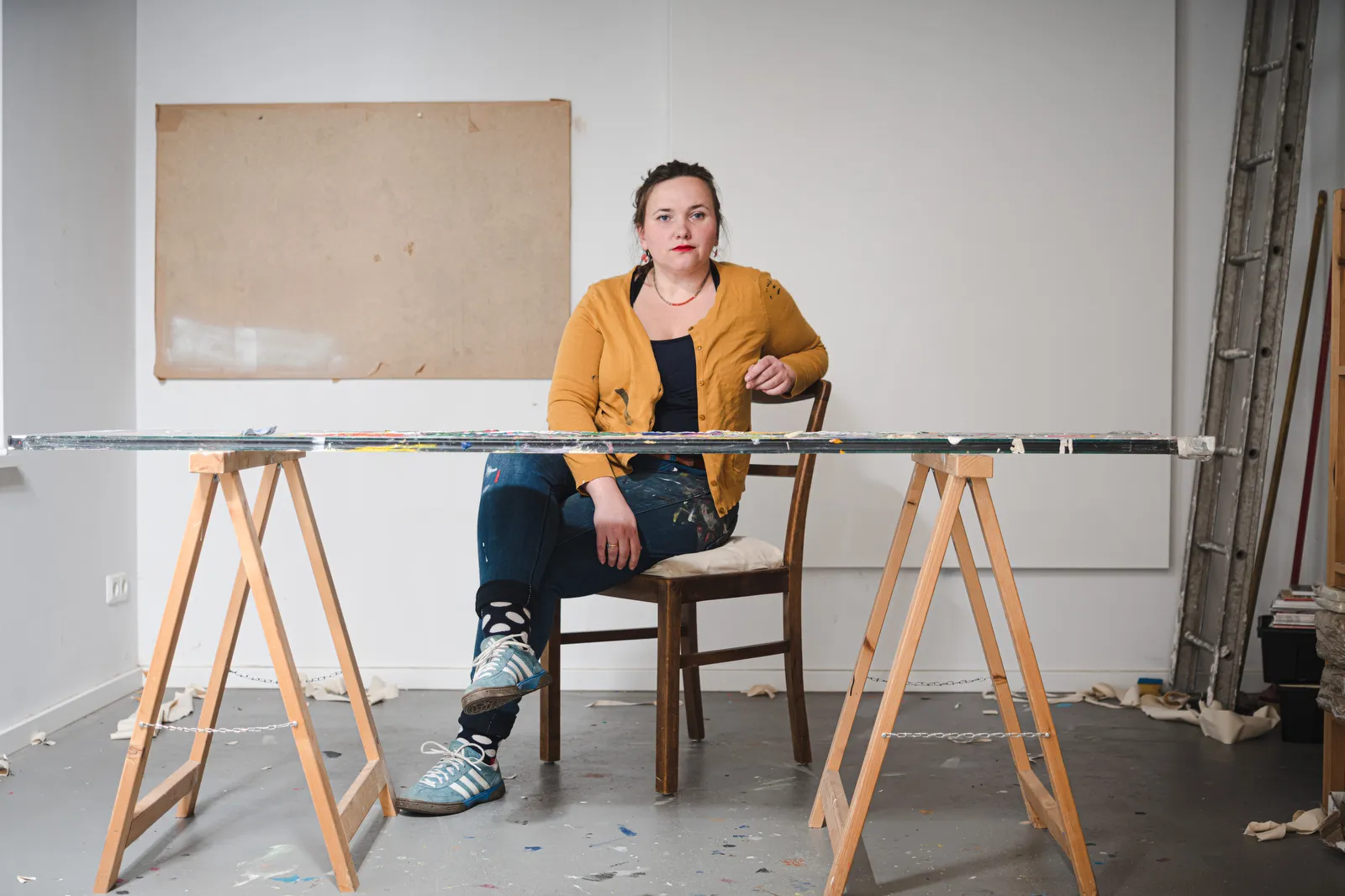
Anja Nürnberg (born in Magdeburg in 1982) is a visual artist who has been living and working in Halle (Saale) since 2008. After studying International Business Administration in Germany and the USA, she studied painting and graphic art at Burg Giebichenstein University of Art and Design Halle from 2008 to 2013.
Nürnberg is developing a contemporary painting practice based on atmospheric abstraction, colour fields and rhythmic structures. Her works evoke a sensory presence through traces of the figurative, without, however, constructing a narrative. Memory functions more as a catalyst than as a subject: the paintings open up spaces in which viewers encounter their own associations and emotional resonances. Through a blend of gestural expression, fragmentation and concentration, she creates compositions that remain open, precise and resistant to symbolic reduction.
Her work has received numerous awards, including from the Saxony-Anhalt Art Foundation, and is represented in public collections, such as the Saxony-Anhalt State Art Collection and the Aalen Municipal Collection. Recent exhibition projects have taken her to Potsdam, Riesa, Munich and Cottbus, amongst other places.
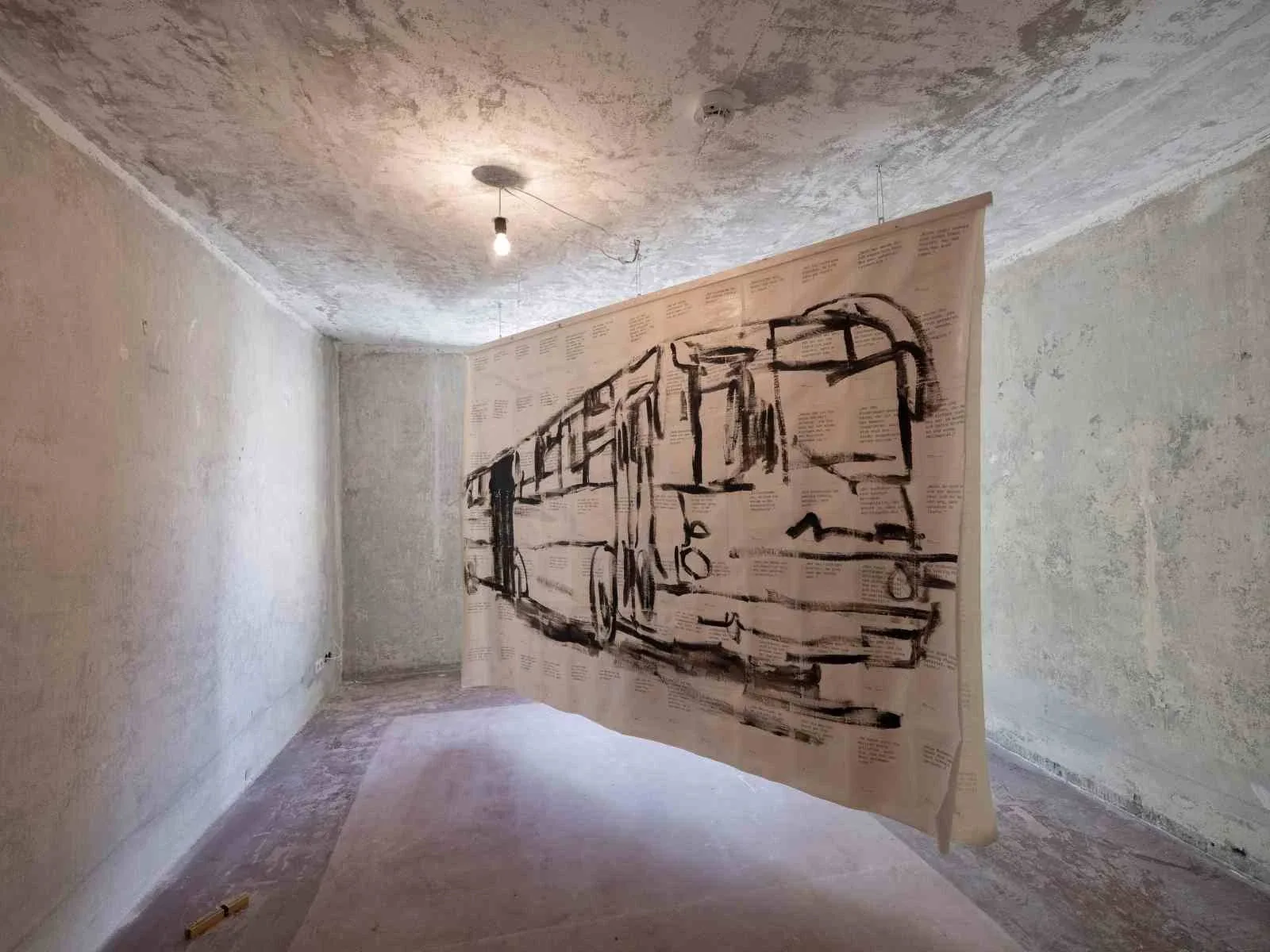
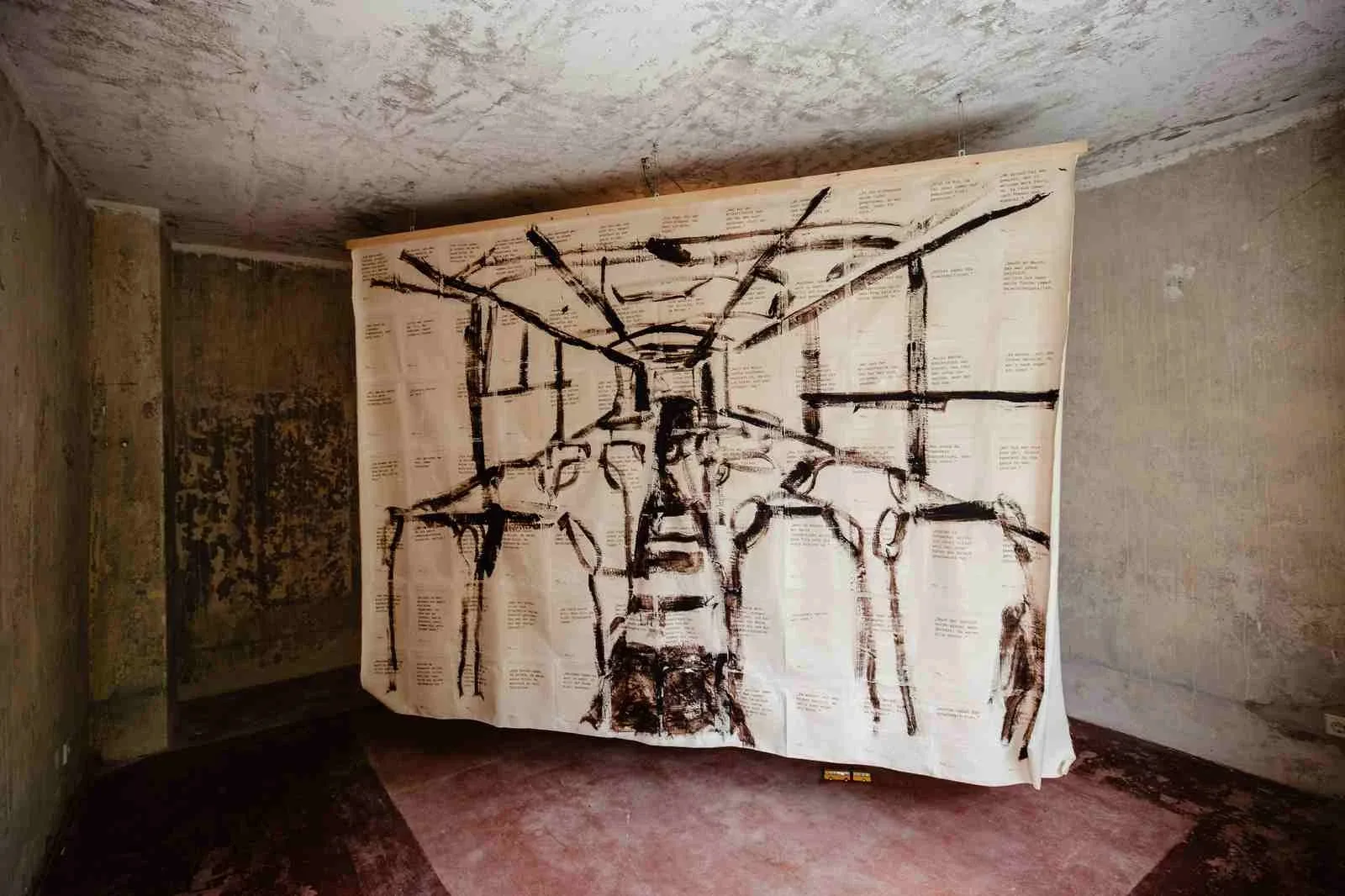
Work title: Ikarus 280.3 – Voices of Lower Lusatia
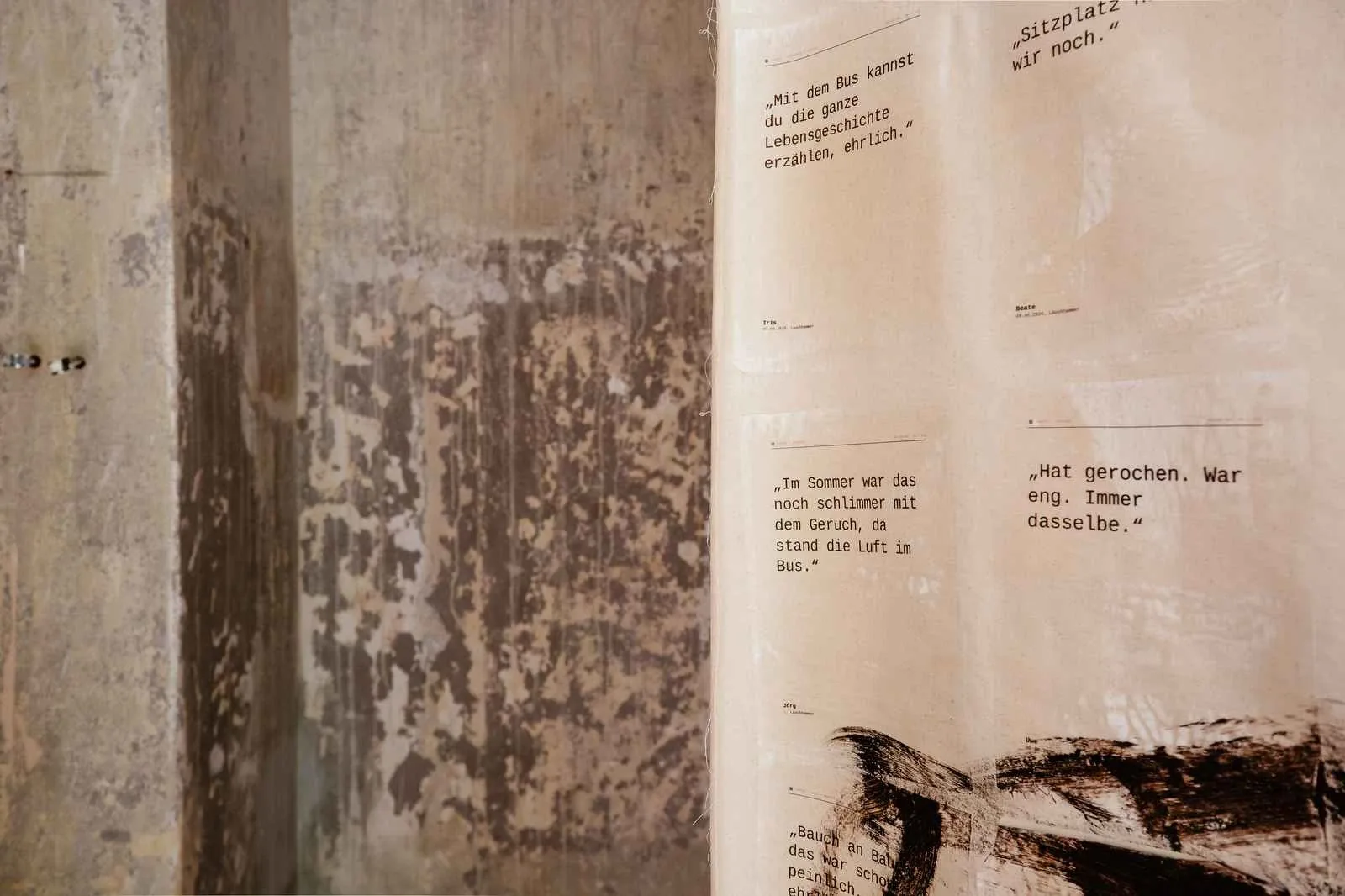
Through her large-scale charcoal drawings Ikarus 280.3 – Voices of Lower Lusatia, Anja Nürnberg explores everyday life in the once-prosperous town of Lauchhammer and distils it into a multi-layered artistic space of remembrance. At the centre is the Ikarus 280.3, the articulated bus that transported millions of passengers every day in the GDR and shaped the rhythm of working life for decades. The morning crush in the buses, affectionately known locally as ‘Schlenki’, the smell of diesel and coal dust, and the close proximity of people all form part of a collective experience that still resonates today. Amidst the industrial upheaval and far-reaching changes in Lusatia, the bus remained for many a symbol of a time when work, community and the structure of everyday life seemed self-evident. Whilst the early services were used primarily by manual workers, the humorous term ‘Schlipsbus’ (tie bus) became established for the bus routes used by white-collar workers – a subtle reference to social differences within the seemingly homogeneous system.
In her charcoal drawings, Anja Nürnberg explores this tension between closeness and difference. The large-format sheets of paper themselves become vessels of meaning: within them, hinted-at streams of people, diffuse morning light and atmospheric recollections of sounds and smells overlap. The Ikarus bus thus becomes the central visual symbol for questions of transformation, identity and memory. It connects movement and stillness, past and present, as well as loss and continuity. It is within this ambivalence that the work’s true theme unfolds: the invisible that remains when an era comes to an end.
further reading
Exhibition
/ Biennale
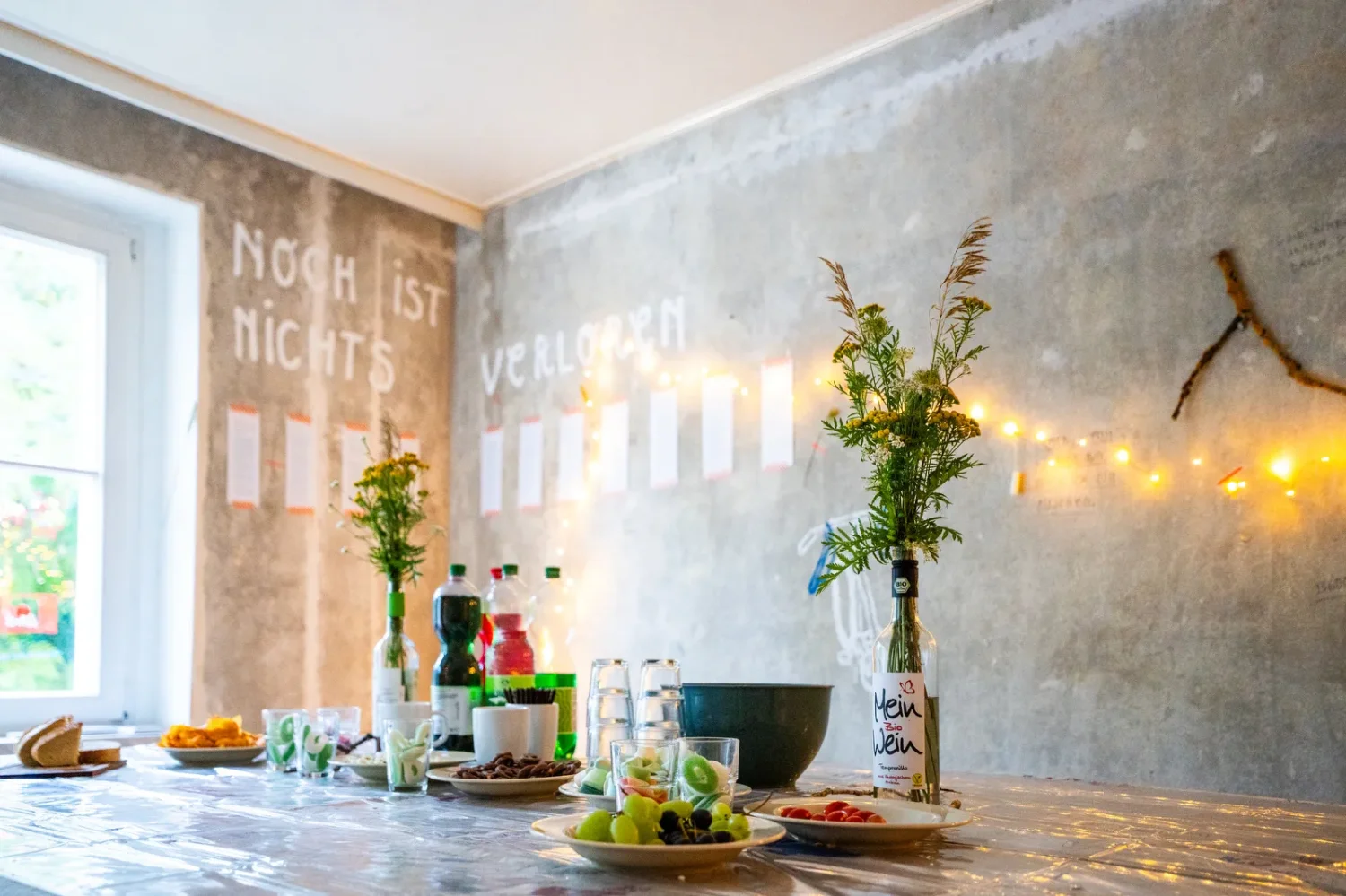
Räume zwischen Vergangenheit und Gegenwart - Lauchhammer
08.08.—23.08.2026,
Heinrich-Zille-Str. 1 Lauchhammer / Wokrejs Górne Błota-Łužyca
Louisa Frauenheim Johannes Weilandt Claudia Pilsl Christian Hasucha Matrosenhunde Anke Hannemann Marie Kublik & Frida Teller Anja Nürnberg Bernhard Schipper
about the event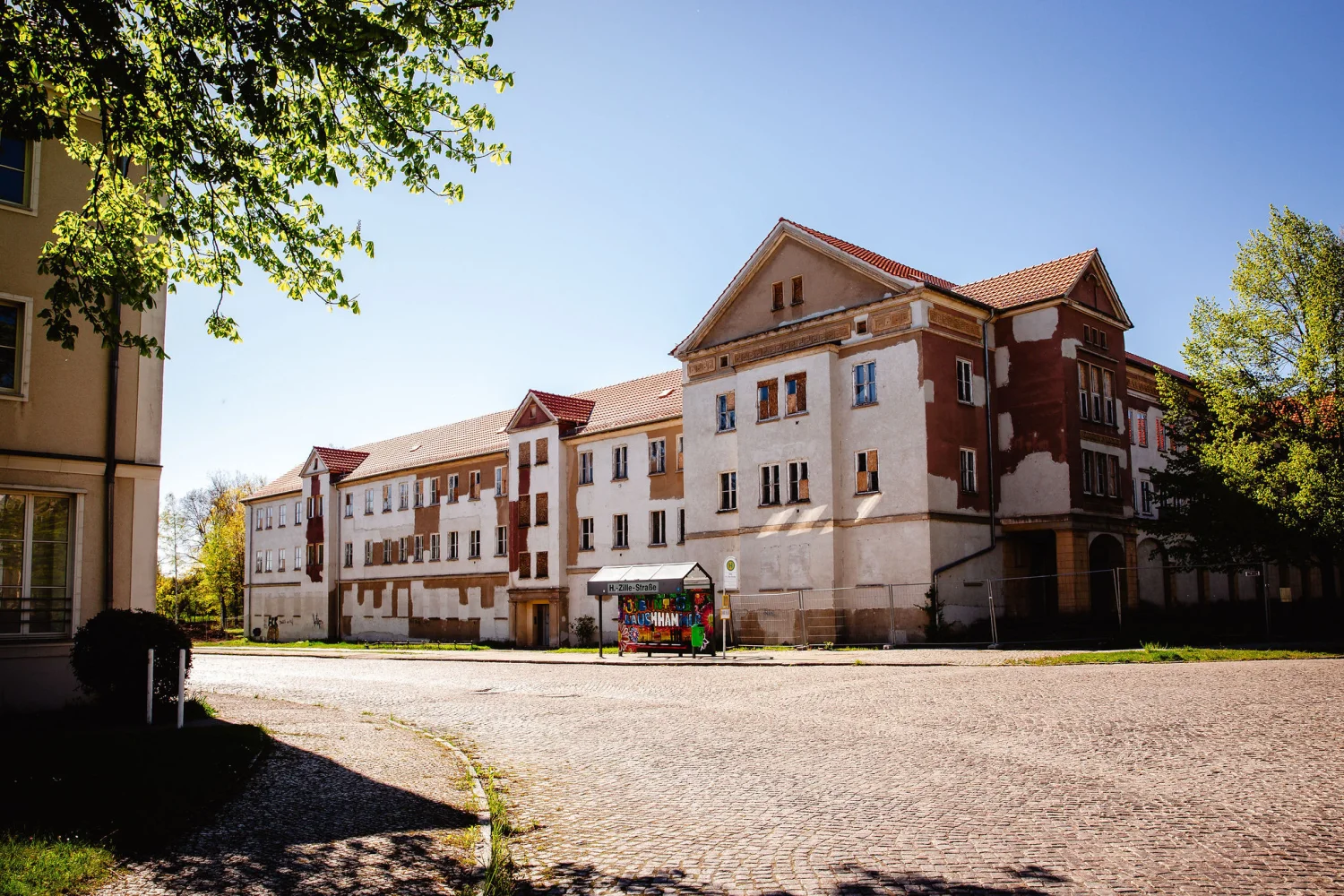
Vernissage
/ Biennale
Vernissage in der Heinrich-Zille-Str. 1
08.08.2026,
Heinrich-Zille-Str. 1 Lauchhammer / Wokrejs Górne Błota-Łužyca
Louisa Frauenheim Johannes Weilandt Claudia Pilsl Christian Hasucha Matrosenhunde Anke Hannemann Marie Kublik & Frida Teller Anja Nürnberg Bernhard Schipper
about the event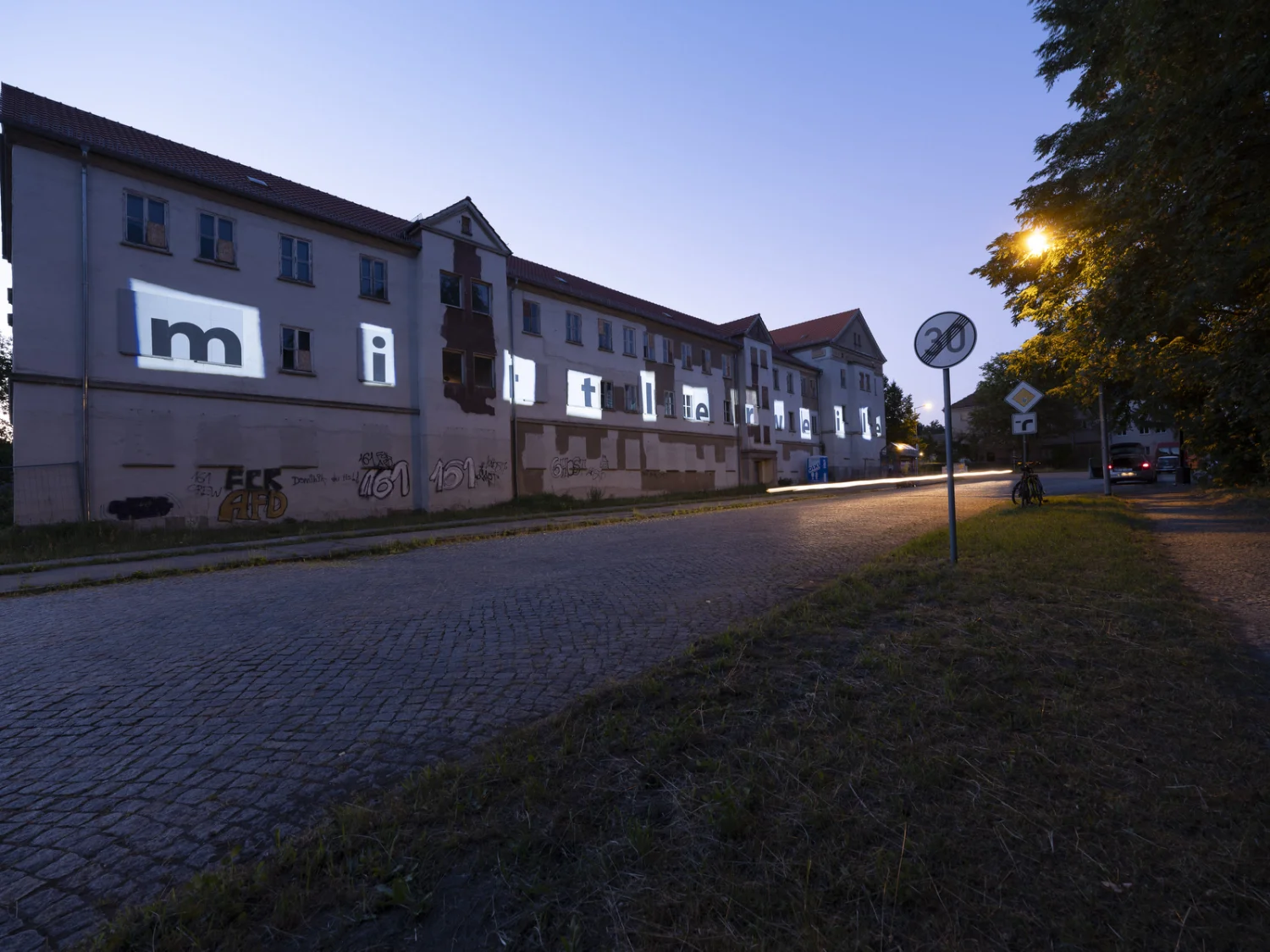
Finissage
/ Biennale
Finissage in Lauchhammer
23.08.2026,
Heinrich-Zille-Str. 1 Lauchhammer / Wokrejs Górne Błota-Łužyca
Birgit Fechner Dirk Sorge Reinhard Sandner Anja Nürnberg Bernhard Schipper Brigitte Böckmann-Jennen Christian Hasucha Claudia Pilsl Grotest Maru Johannes Weilandt Louisa Frauenheim Marie Kublik & Frida Teller Matrosenhunde
about the event