
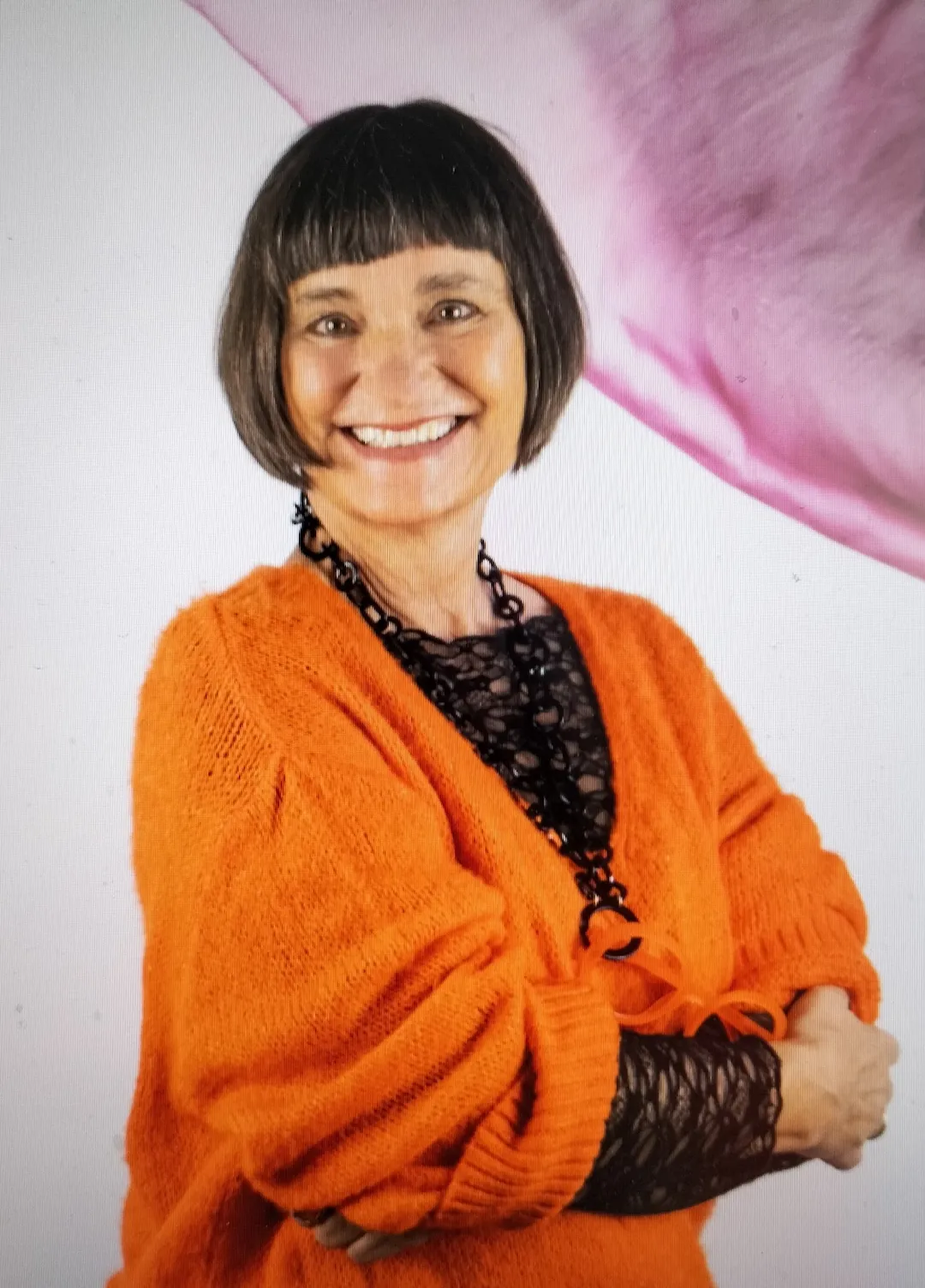
Annette Hecht-Bauer (born in 1963 in Reutlingen) is a freelance artist, designer, and instructor specializing in textiles, objects, and printmaking. She lives and works in Baden-Württemberg.
After completing her studies in textile design with a focus on knitwear at the University of Applied Sciences in Reutlingen (1983–1987), she initially worked as a staff designer in the textile industry before becoming a freelance designer in 1993.
Since 2005, Hecht-Bauer has also worked as a freelance instructor in illustration and design, including at Reutlingen University of Applied Sciences and the Sigmaringen School of Fashion. Her artistic practice is characterized by a material- and process-oriented approach that combines textile techniques, objects, painting, and printmaking. A recurring theme is her experimental use of found materials and everyday objects.
Her works have been shown in numerous solo and group exhibitions, including at the Kunstverein and Kunstmuseum Reutlingen, the Württembergischer Kunstverein in Stuttgart, the Galerie Interart in Stuttgart, the Shedhalle in Tübingen, the Städtische Galerie in Ehingen, as well as in other institutional and alternative exhibition spaces in Baden-Württemberg, Berlin, Brandenburg, and Bonn.
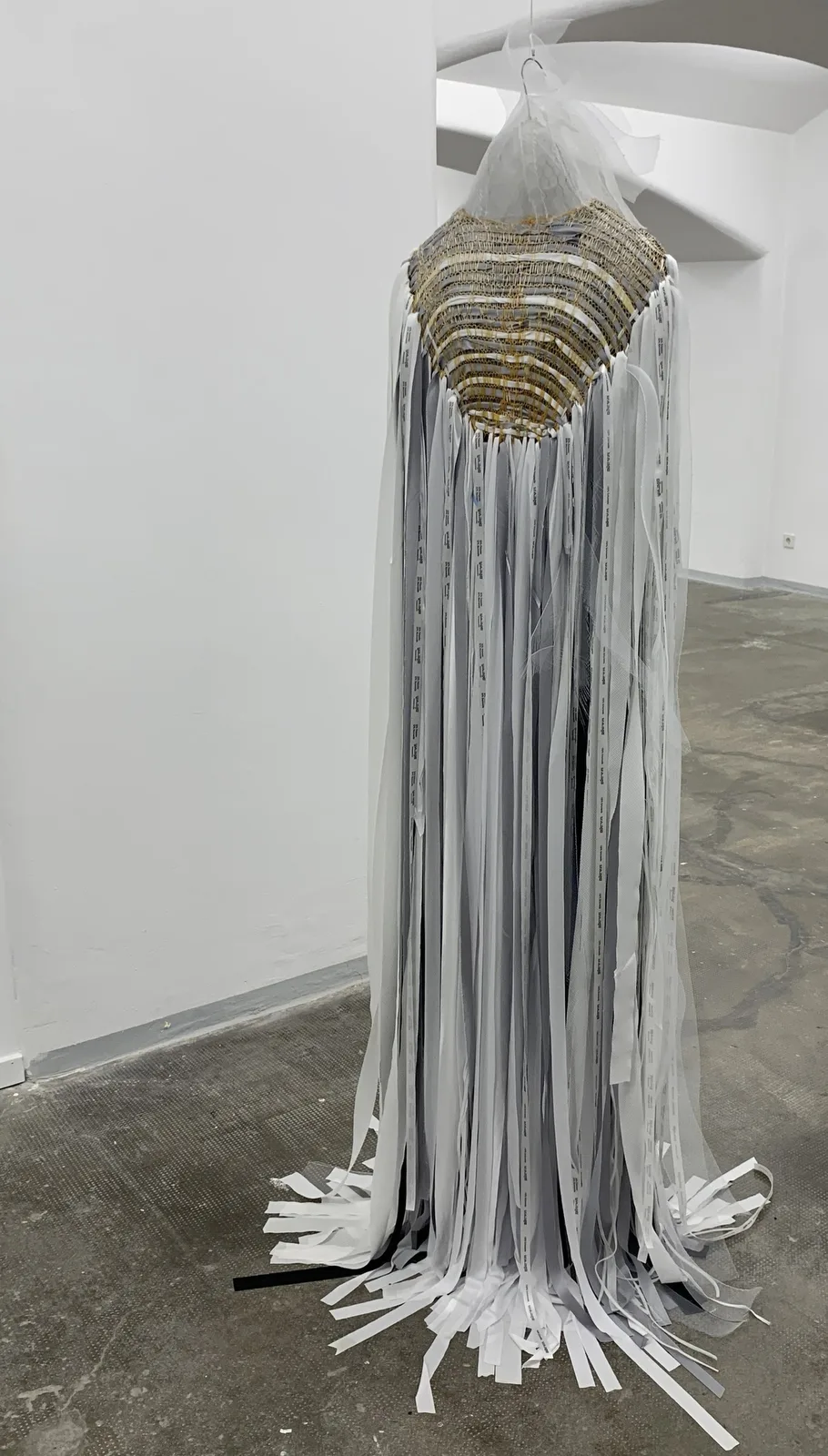
Work Title: Verwoben
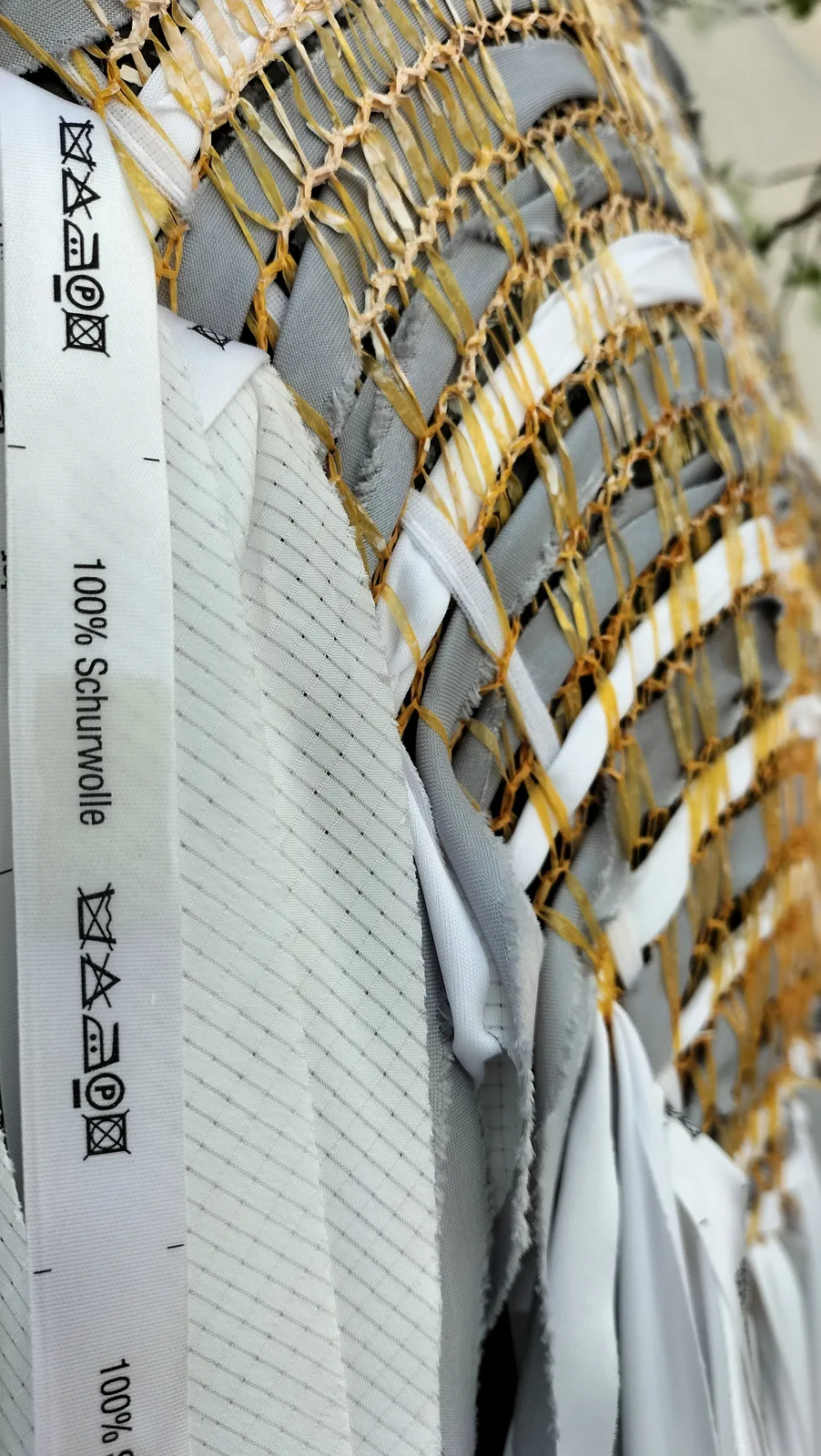
Annette Hecht-Bauer explores traditional weaving techniques and recalls the long history of linen and cotton weaving in Upper Lusatia. Here, clothing is seen as a ‘second skin’ – a material that is so close to our bodies and accompanies us throughout our lives.
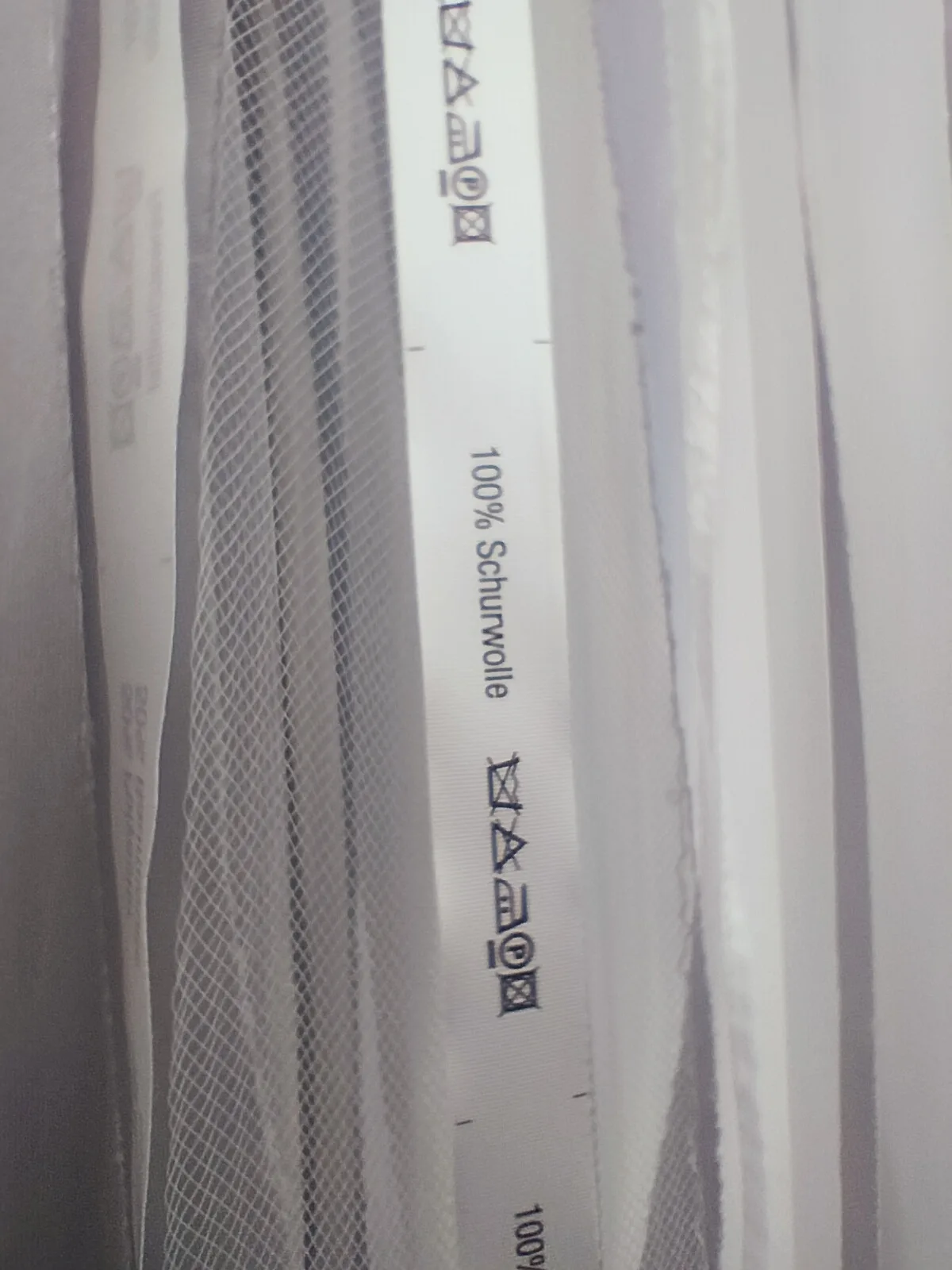
For her work, the artist has reused materials, including vegetable bags and offcuts from the textile industry. From these, a textile covering is created. This covering invites us to view clothing as something that accompanies us in our everyday lives, protects us and, at the same time, expresses our identity.
Verwoben straddles the boundary between clothing and object. It encourages us to rediscover materials and spaces: how do familiar everyday fabrics transform when they become art? What stories do fabrics carry within them – about their origin, production and consumption? And how does our bodily awareness change when clothing becomes not only useful, but also aesthetically and narratively effective?
further reading
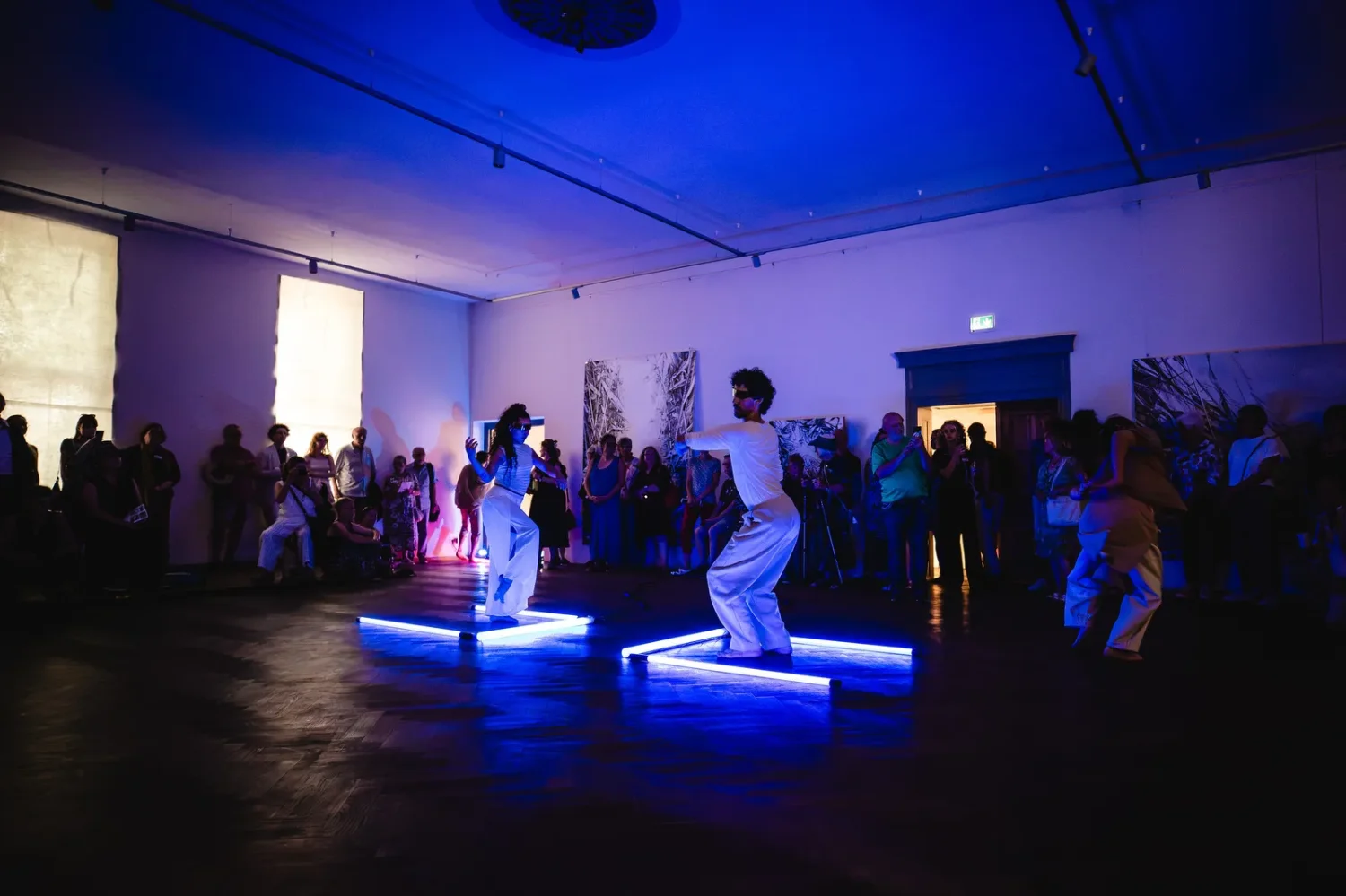
party
/ Biennale
Closing Party of the 1. openart Lausitz Biennale
19.09.2026,
Kunsthalle Lausitz / Chóśebuz
Anne Peschken / Marek Pisarsky (Urban Art) Annette Hecht-Bauer Caroline Böttcher Casey McKee Endstation Jam Jess Zamora-Turner Katharina Arndt Lioba von den Driesch Siggiko Valentina Troendle Felix Matschke Tracey Snelling Martin Böttger Miriam Lenk
about the event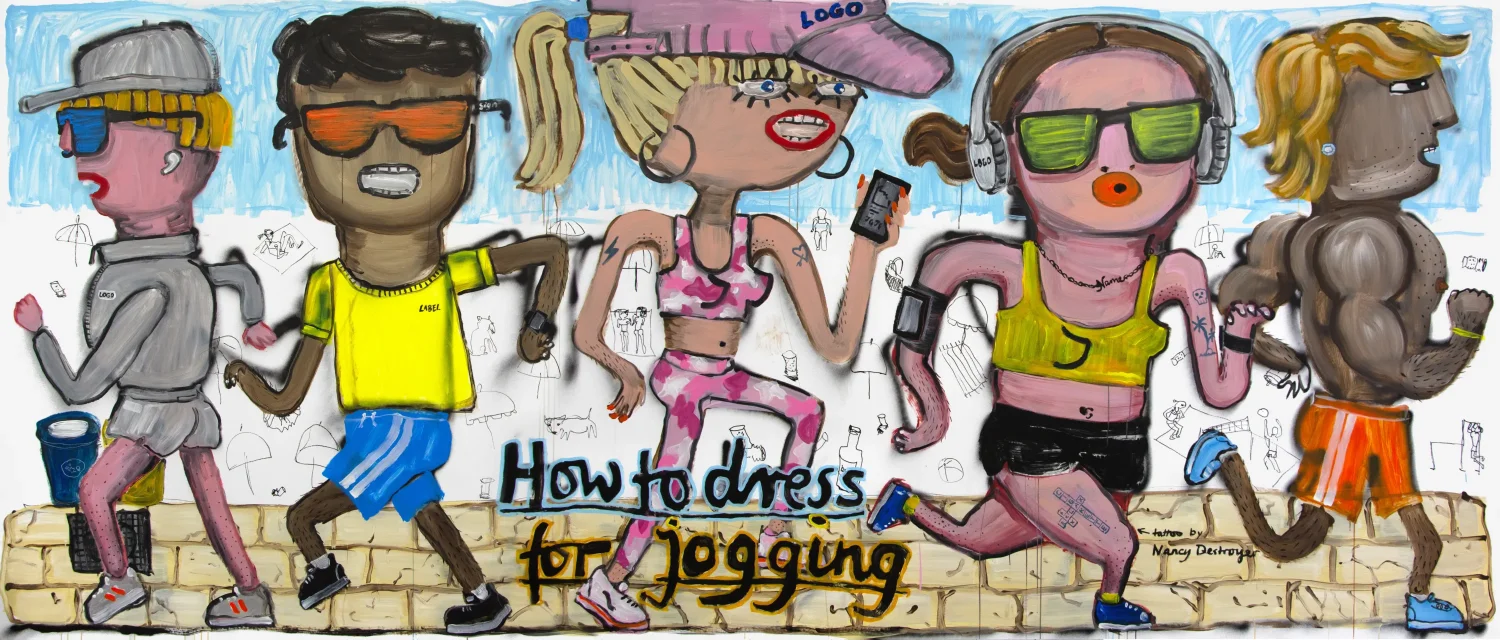
Finissage
/ Biennale
Finissage "Urbane Wandlungen. Kunst zwischen Bewegung, Erinnerung und Transformation"
20.09.2026,
Kunsthalle Lausitz / Chóśebuz
Anne Peschken / Marek Pisarsky (Urban Art) Annette Hecht-Bauer Caroline Böttcher Casey McKee Endstation Jam Katharina Arndt Lioba von den Driesch Siggiko Valentina Troendle Felix Matschke Tracey Snelling Martin Böttger Miriam Lenk
about the event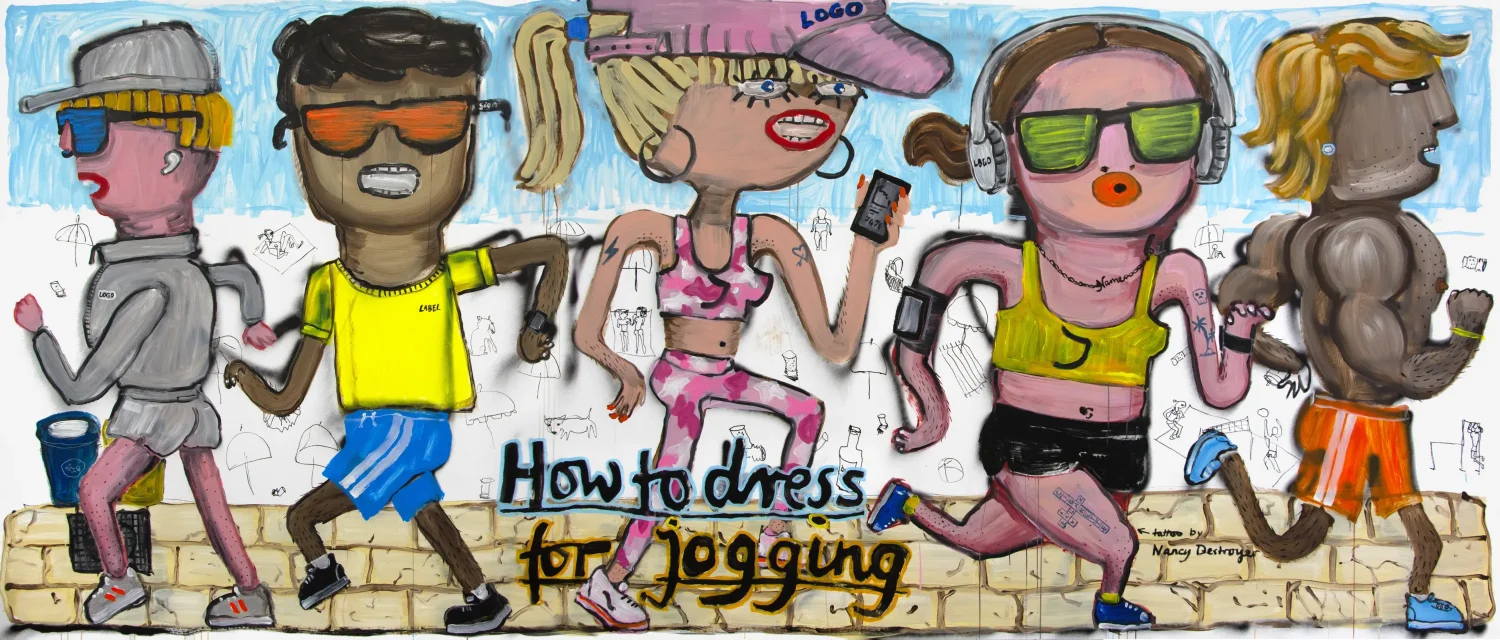
Guided tour
/ Biennale
Guided tour "Urbane Wandlungen. Kunst zwischen Bewegung, Erinnerung und Transformation"
12.09.2026,
Kunsthalle Lausitz / Chóśebuz
Anne Peschken / Marek Pisarsky (Urban Art) Annette Hecht-Bauer Caroline Böttcher Casey McKee Endstation Jam Katharina Arndt Lioba von den Driesch Siggiko Valentina Troendle Felix Matschke Tracey Snelling Martin Böttger Miriam Lenk
about the event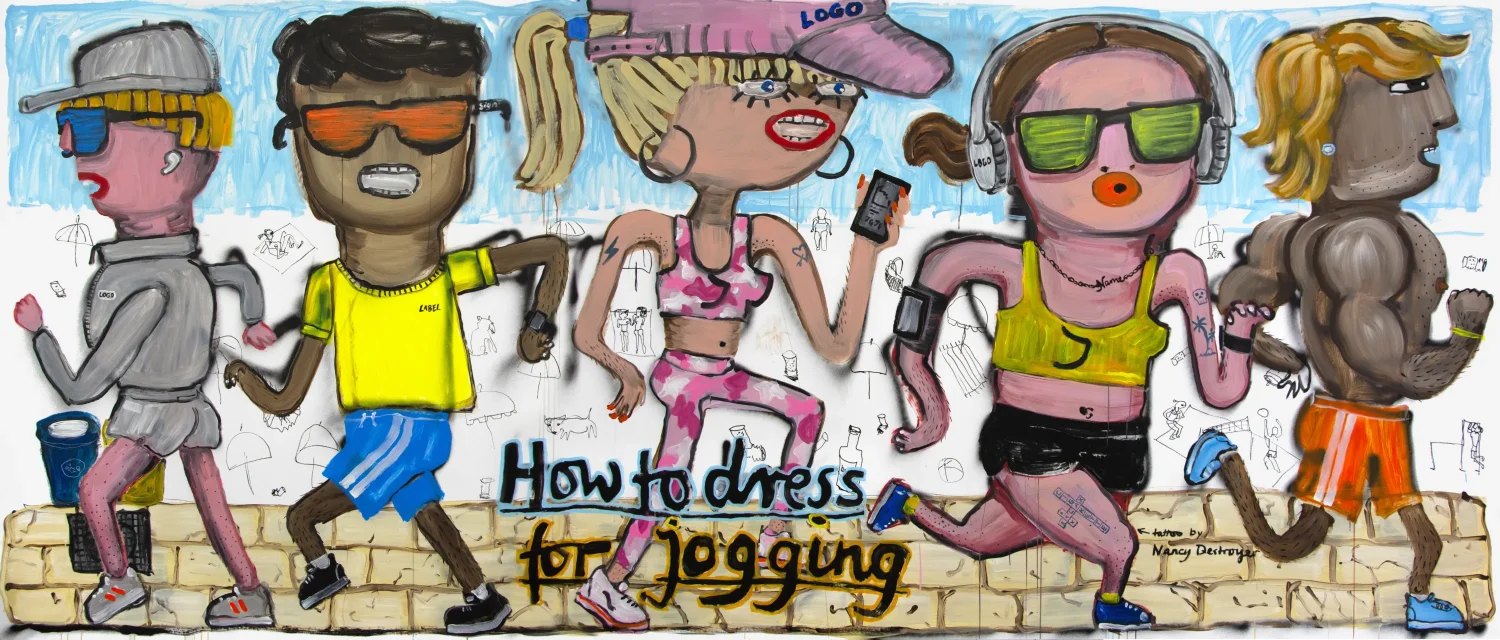
Guided tour
/ Biennale
Guided tour "Urbane Wandlungen. Kunst zwischen Bewegung, Erinnerung und Transformation"
13.09.2026,
Kunsthalle Lausitz / Chóśebuz
Anne Peschken / Marek Pisarsky (Urban Art) Annette Hecht-Bauer Caroline Böttcher Casey McKee Endstation Jam Katharina Arndt Lioba von den Driesch Siggiko Valentina Troendle Felix Matschke Tracey Snelling Martin Böttger Miriam Lenk
about the event
Exhibition
/ Biennale
Urbane Wandlungen. Kunst zwischen Bewegung, Erinnerung und Transformation
05.09.—20.09.2026,
Kunsthalle Lausitz / Chóśebuz
Anne Peschken / Marek Pisarsky (Urban Art) Annette Hecht-Bauer Caroline Böttcher Casey McKee Katharina Arndt Lioba von den Driesch Miriam Lenk Siggiko Valentina Troendle Tracey Snelling Felix Matschke Endstation Jam Martin Böttger
about the event
Vernissage
/ Biennale
Vernissage "Urbane Wandlungen. Kunst zwischen Bewegung, Erinnerung und Transformation"
05.09.2026,
Kunsthalle Lausitz / Chóśebuz
Anne Peschken / Marek Pisarsky (Urban Art) Annette Hecht-Bauer Caroline Böttcher Casey McKee Endstation Jam Katharina Arndt Lioba von den Driesch Siggiko Valentina Troendle Felix Matschke Tracey Snelling Martin Böttger Miriam Lenk
about the event