
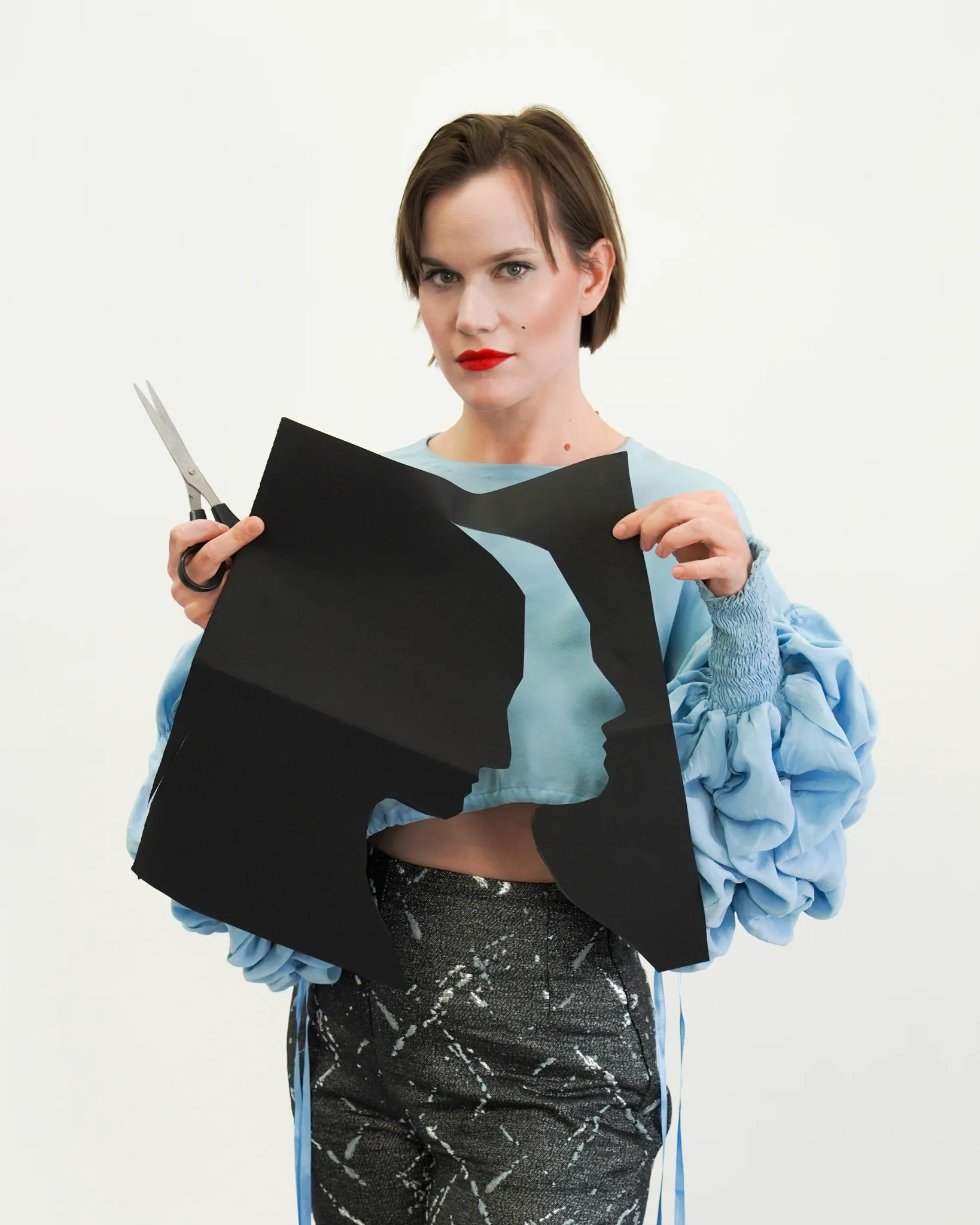
Sonja Yakovleva (born in 1989 in Potsdam) is an artist based in Frankfurt am Main who uses monumental paper cutouts and large-format visual compositions to explore social power dynamics, class issues, and body politics.
Her works combine pop-feminist irony with a precise analysis of performance- and consumer-driven society.
Yakovleva studied at the Offenbach University of Art and Design and at the Athens School of Fine Arts. She is a member of the KVTV collective, which produces exhibition and media projects. Her works have been exhibited at venues including the Kunstmuseum Stuttgart, the Frankfurter Kunstverein, the Kunstraum Potsdam, the Kunstpalais Erlangen, the Klingspor Museum, the Städtische Galerie Nordhorn, and the saasfee* pavilion.
Her works often take a political approach: in her visual compositions—made from large-format paper panels, photo board, and drawn elements—infrastructures, production sites, and social power dynamics coalesce into a topographical overlay of the post-industrial city.
The method of montage—the combination of paper cutouts, drawing, and collage-based visual material—allows for the simultaneous depiction of various scenes of precarious labor, everyday invisibility, and intensifying labor struggles.
Work Title: State of Strike
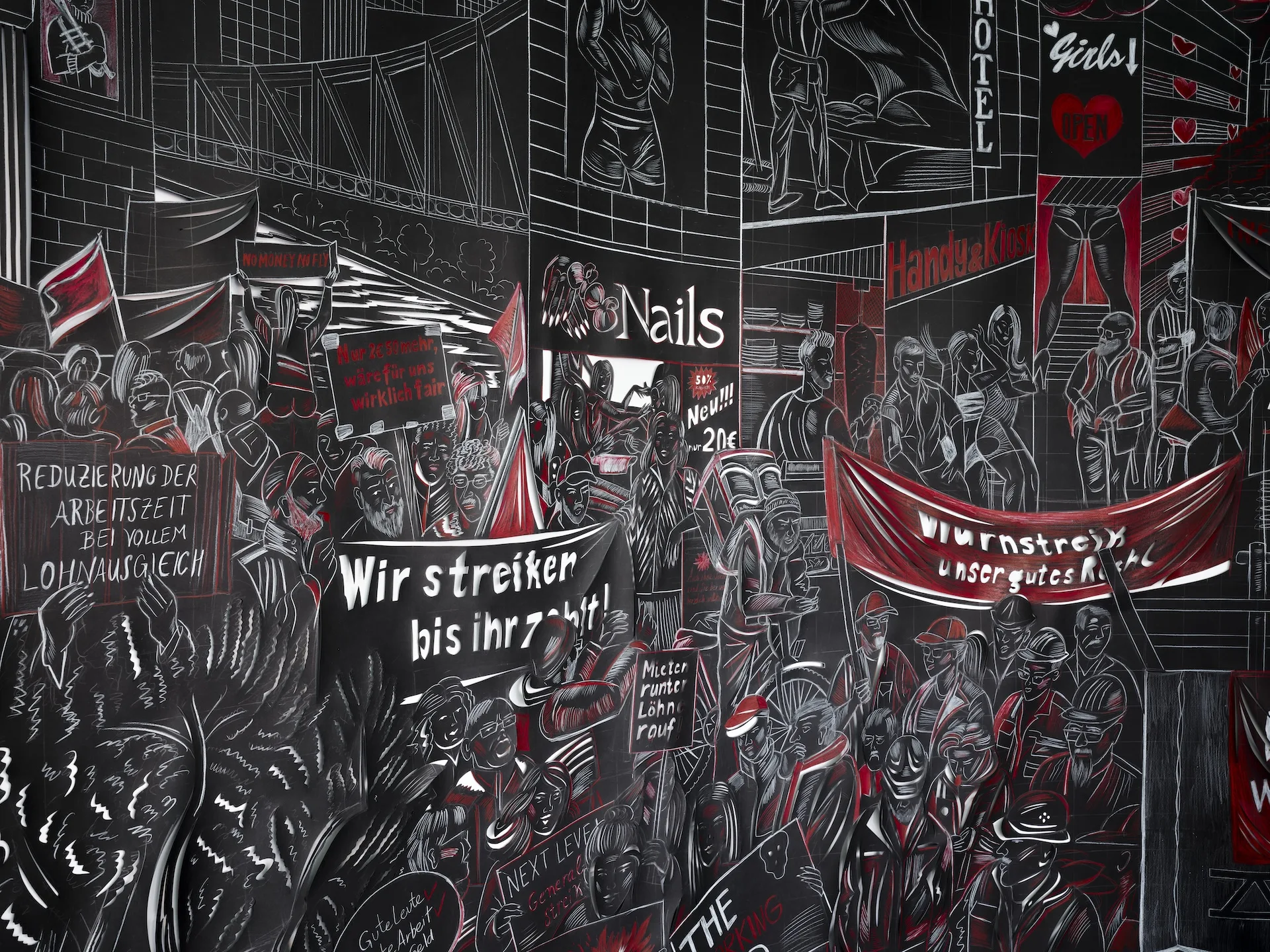
In State of Strike, the city appears as a body whose functions are sustained by workers. Sonja Yakovleva depicts them densely packed in public space—on strike, as a collective force. Even animals raised in industrial feedlots refuse their exploitation. In a wall installation over 10 meters long, she condenses urban infrastructures such as delivery services, caregiving, construction, and the food service industry, integrating real locations. She brings to light those areas that otherwise remain invisible.
At the center is the question of the body and politics: How are bodies exploited—and how can they resist through strike action? Migrant workers, in particular, take center stage. Yakovleva combines research, personal experiences, and historical references to create a multifaceted portrait of social conflicts.
State of Strike conceives of the city as an organism in which labor, invisibility, and collective resistance circulate. The method of montage, combining paper cutouts and drawing, enables a depiction of precarious working conditions, social power structures, and post-industrial environments—elements that also characterize the Lusatia region as it undergoes structural change.
further reading
Exhibition
/ Biennale
Stoffwechsel. Räume und Menschen im Übergang
22.08.—06.09.2026,
Forster Museum für Textil- und Industriegeschichte Lausitz / Wokrejs Sprjewja-Nysa
Sonja Yakovleva Joana Vasconcelos Katharina Maria Wimmer Esther Perbandt Frank Lippold Minh Duc Pham Heike Zappe Karen Modrei Marike Schuurman
about the event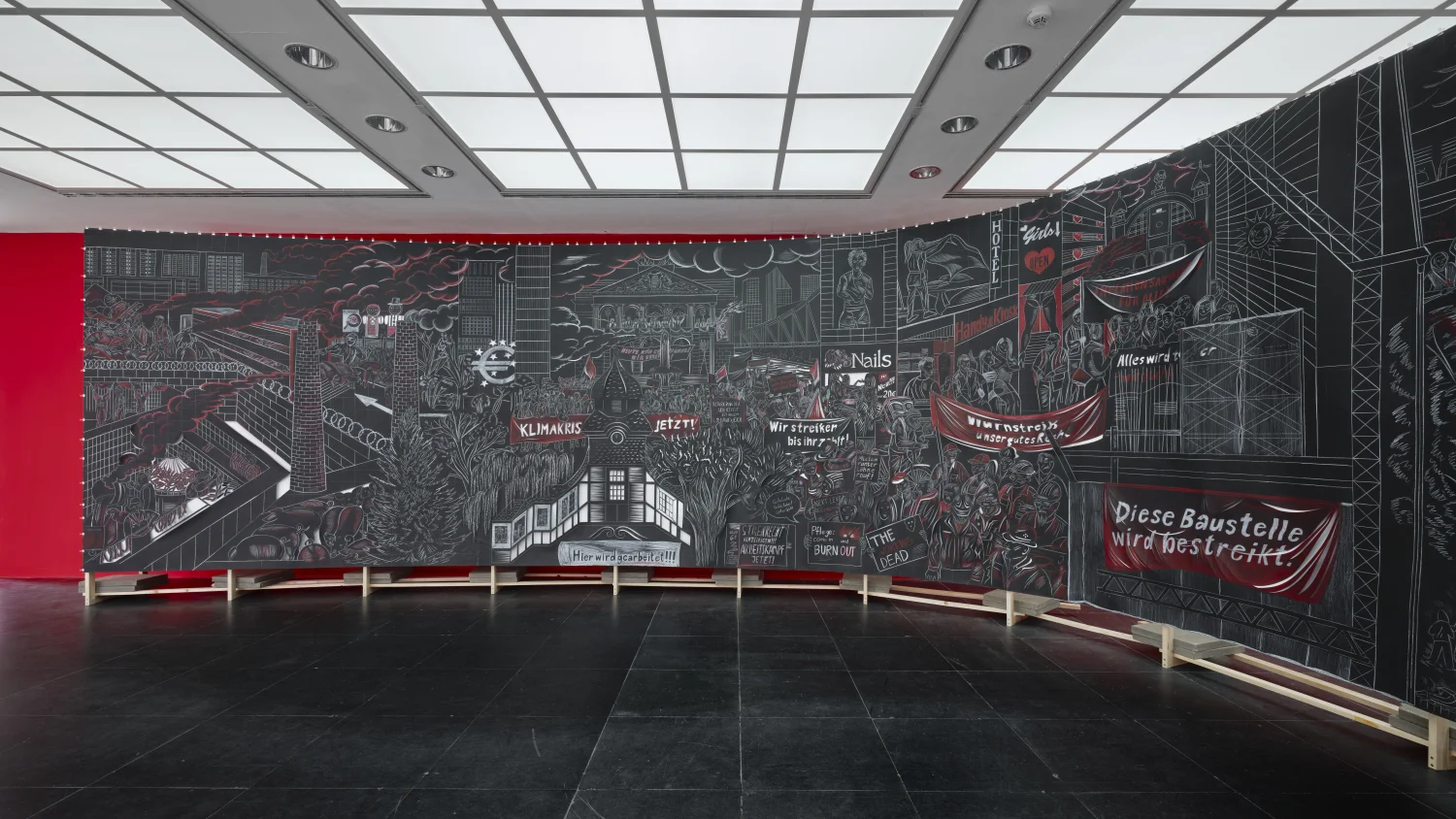
Finissage
/ Biennale
Finissage "Stoffwechsel. Räume und Menschen im Übergang"
06.09.2026,
Forster Museum für Textil- und Industriegeschichte Lausitz / Wokrejs Sprjewja-Nysa
Esther Perbandt Frank Lippold Heike Zappe Joana Vasconcelos Katharina Maria Wimmer Marike Schuurman Minh Duc Pham Sonja Yakovleva
about the event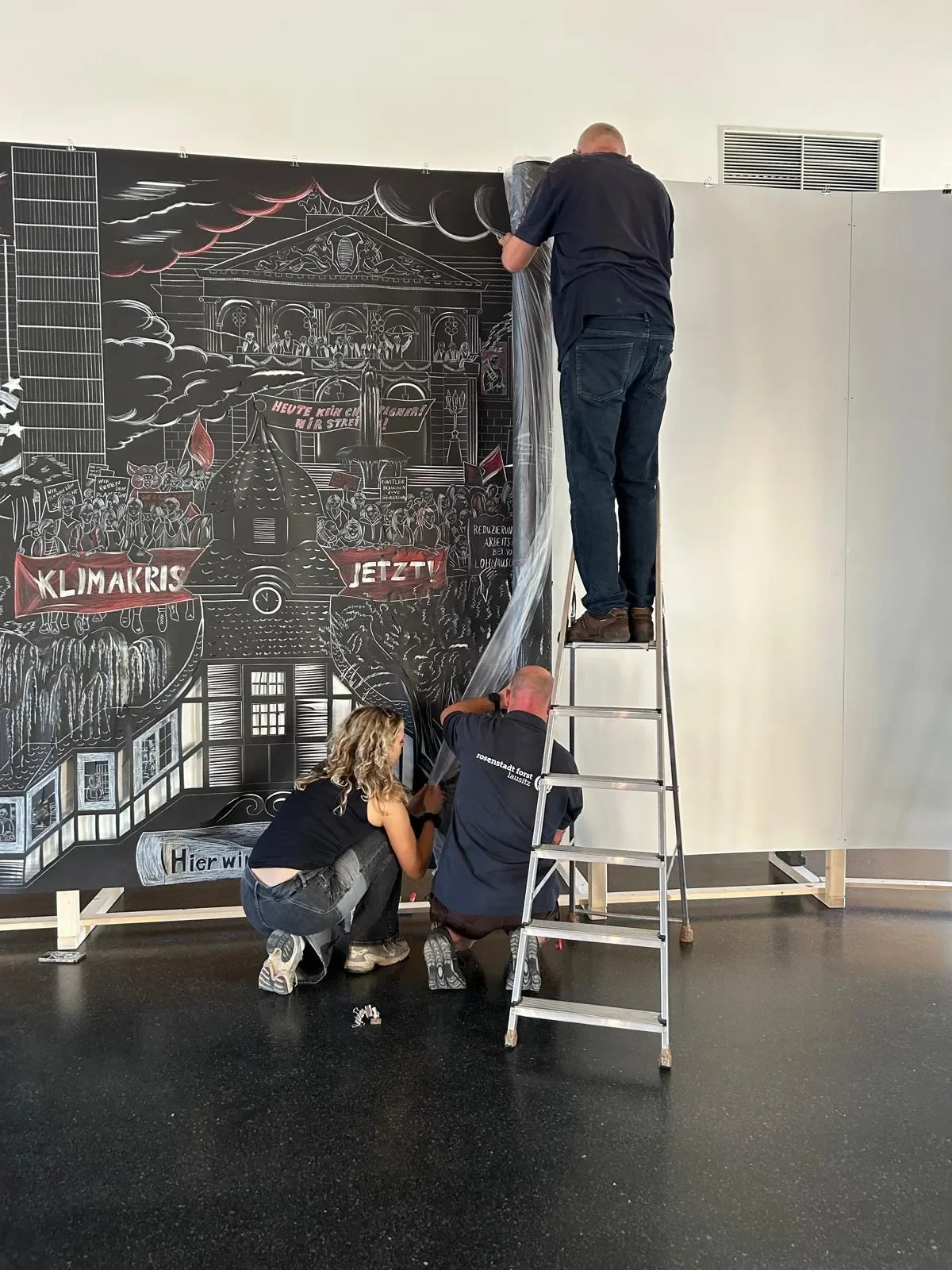
Guided Tour
/ Biennale
Guided tour "Stoffwechsel. Räume und Menschen im Übergang"
29.08.2026,
Forster Museum für Textil- und Industriegeschichte Lausitz / Wokrejs Sprjewja-Nysa
Esther Perbandt Katharina Maria Wimmer Joana Vasconcelos Sonja Yakovleva Frank Lippold Minh Duc Pham Heike Zappe Karen Modrei Marike Schuurman
about the event
Guided Tour
/ Biennale
Guided tour "Stoffwechsel. Räume und Menschen im Übergang"
30.08.2026,
Forster Museum für Textil- und Industriegeschichte Lausitz / Wokrejs Sprjewja-Nysa
Esther Perbandt Katharina Maria Wimmer Joana Vasconcelos Sonja Yakovleva Frank Lippold Minh Duc Pham Heike Zappe Karen Modrei Marike Schuurman
about the event
Exhibition Opening
/ Biennale
Vernissage "Stoffwechsel. Räume und Menschen im Übergang"
21.08.2026,
Forster Museum für Textil- und Industriegeschichte Lausitz / Wokrejs Sprjewja-Nysa
Esther Perbandt Katharina Maria Wimmer Joana Vasconcelos Sonja Yakovleva Frank Lippold Minh Duc Pham Heike Zappe Karen Modrei Marike Schuurman
about the event