
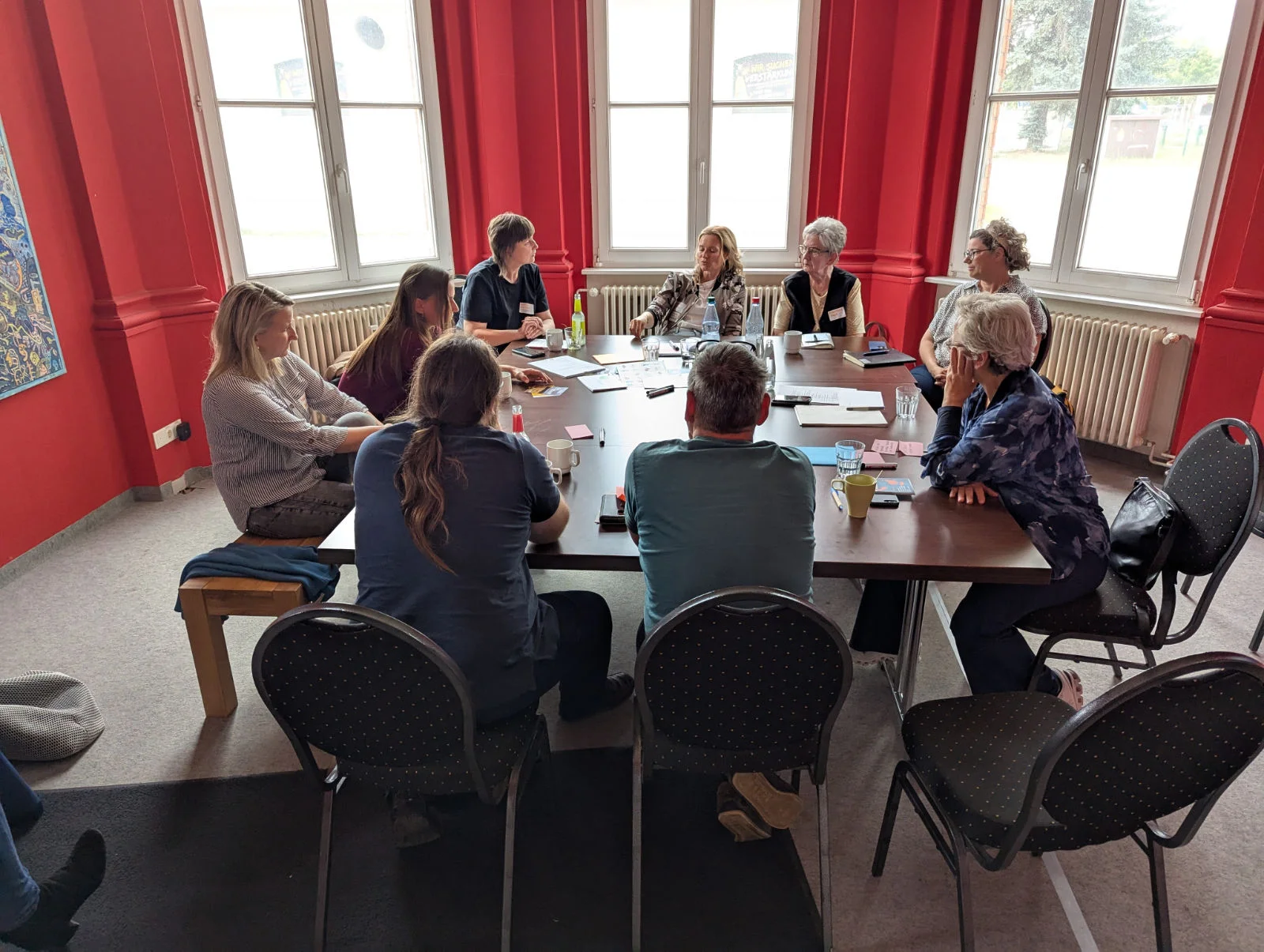
On 6 June 2025, Atelierhof Werenzhain e.V., in collaboration with ‘Menschen machen Kultur’ (People Make Culture), the cultural programme of the Lausitz Citizens’ Region, hosted an event at the Kunsthalle Lausitz in Cottbus. The aim was to facilitate a joint exchange between artists from Lusatia, those active in the arts and culture, and representatives of local institutions, with a view to developing formats for active participation as part of the 1st openart Lausitz Biennale. The intention was to strengthen the vision of collaborative action – particularly in this predominantly rural region.
To kick things off, Artistic Director Michaela van den Driesch presented the concept and background of the Biennale.
In the salon discussions that followed, participants discussed the following topics:
Cultural spaces and infrastructure
• What existing project spaces, in line with the theme ‘Art shapes spaces!’, are already in place in the region?
• Which vacant spaces (lost places) could also be put to artistic use?
Artistic concept for visitor participation
• Which participatory formats have already been developed and can be introduced and implemented?
• How can local people be specifically targeted and actively involved?
Supporting regional artists
• What are our aspirations, and what values do we wish to convey?
• How can public understanding of art and culture in Lusatia be strengthened?
The results of the discussions were subsequently presented and are summarised below:
1. Cultural spaces and infrastructure
The event clearly demonstrated that whilst there are many cultural spaces, active users are often lacking. Vacant properties offer potential, particularly when towns support creative temporary uses. Good accessibility – for example, through new bus routes in rural areas – as well as open and inviting entrances are important.
Networking and raising the profile of cultural offerings are key tasks. Shared calendars, digital tools for space allocation and event formats such as culture-themed bus tours can break down barriers.
Organisational issues, such as responsibilities and usage rights, require clear rules and designated points of contact. A code of conduct helps to build trust and reliability. Cultural education and organisational skills must also be strengthened.
A lack of resources remains a challenge. Shared infrastructure, pooled expertise and pilot projects can identify viable solutions. Visionary ideas such as the revitalisation of lost places require courage, openness and a willingness to embrace the new.
Transformation is the goal: sustainable structures, voluntary engagement, long-term collaborations, recurring formats and the continued use of designed spaces ensure an impact beyond the Biennale.
Open spaces for encounter, where global and regional issues are discussed and active participation is enabled, create lasting relevance and resonance.
2. Artistic concept for visitor participation
Art is often perceived as elitist in the region. To change this, barriers must be broken down and art brought closer to the people. It should be open and diverse, whilst remaining locally rooted and tailored to people’s lived realities. Local biographies and experiences are incorporated into artistic processes.
In marketing, regional influencers, accessible language and creative forms of communication are key. Collaborations with schools, artists, families and local stakeholders strengthen connection and reach.
People are more likely to get involved when they feel welcome, safe and included. This requires regular, recurring activities, clear points of contact in the event of conflicts, and inclusive spaces. Events in familiar local settings, as well as the integration of regional structures, facilitate access.
A shared set of values fosters encounters on equal terms and promotes respectful coexistence. This includes a willingness to engage in dialogue, mutual appreciation and trust, as well as openness and empathy for personal stories.
3. Supporting regional artists
Support for regional artists is based on core values such as mutual respect, creative freedom, solidarity and tolerance. A multifaceted understanding of art, fostered through cultural education, opens up spaces for individual fulfilment and social development.
Art makes regional identities visible and strengthens the cultural diversity of Lusatia. At the same time, it is essential to enhance the national profile of local artists.
Last but not least, it is important to emphasise the necessity of art more clearly by highlighting its diverse functions: art inspires, conveys values, brings joy and encourages reflection. Its value lies not only in its aesthetic qualities, but also in its ability to shift perspectives and help shape social processes.